
©By Dr. Sue Xiang, Acupuncturist-Chinese Medicine Practitioner, Research Immunologist & Educator, AcuCare Wellness Clinic
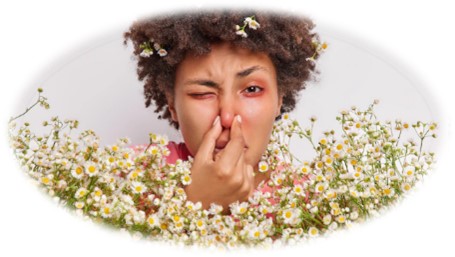
As spring gracefully ushers in its arrival in Melbourne, it brings with it not just the promise of blooming flowers and warmer days, but also an annual resurgence in hay fever cases that sweeps through the country. With the changing seasons, a familiar wave of sneezes, sniffles, and itchy eyes descends upon many, reminding us that nature's beauty can sometimes come with a pollen-laden price.
Hay fever, also called allergic rhinitis (AR), is a chronic allergic reaction to pollen which recurrent annually during the spring season - A season dreaded by the 4.5 million Australians who suffer from the condition. It has been reported that approximately 19% of Australians in 2017-2018 had allergic rhinitis, and the prevalence is still raising (AIHW, 2020).
A quick step outdoors could trigger a symphony of symptoms – from persistent sneezing and runny nose to inflamed red eyes and, sometimes, even difficulty breathing. The impact of AR stretches beyond the physical discomfort, the incessant symptoms can permeate every aspect of life, hindering work, social interactions, mental well-being, and even economic burden (Fineman, 2002).
So, is there a cure for people who is suffering this annual torture? The simple answer is NO. Allergic rhinitis is an inflammatory autoimmune disease caused by the body hypersensitive immune reaction to an “innocuous substance” which harmless to some not all people. The overactive immune system produces antibodies (IgE) to attack the allergen and releases histamine in circulation, causing allergy symptoms. Research shows that the tendency to develop such allergy is both genetic and environmental (Gao et al., 2020; Waage et al., 2018).
Modern medicine, while remarkable, hasn't provided a definitive cure for AR. The standard treatment strategy is to control symptoms with pharmacotherapy while reducing exposure to allergens. However, long-term use of allergic medications, such as antihistamine, often brings adverse effects such as drowsiness, constipation, glaucoma and even the risk of gliomas (Farzam et al., 2023; Yanai et al., 2012), along with complications like drug tolerance and dependence. Faced with these challenges, individuals in search of effective and low-risk alternatives are turning their attention to alternative treatments.
Recently, an internet news article titled “Acupuncture Beats Drugs for Allergic Rhinitis Relief” (HealthCMi, 2019) caught my attention, the news described a recent randomized control trial (RCT) study in China and highlighted how acupuncture provided significant and lasting relief from AR, with an impressive 90% efficacy compared to conventional drug therapies (antihistamine and steroid nasal spray) at 78%, and without any observed side effects (Sun et al., 2019). If this is true, could acupuncture hold the magic key to solving this persistent predicament?
This success story triggered a deeper investigation into the role of acupuncture in managing AR. Interestingly, there has been a few recent RCT studies on the acupuncture efficacy in the management of AR in English literature. Following the 2019 study mentioned above, Sun et al. further investigated their special acupuncture technique, warm needle therapy, and provided biomedical evidence of acupuncture in reducing inflammation and enhance immune function (Sun et al., 2023).
While there have been numerous clinical studies and research on the efficacy of acupuncture in treating AR (McDonald & Janz, 2017), designing well-controlled acupuncture RCT studies has been a practical challenge (Birch, 2004). Most of the studies have a potential high risk of performance bias. However, despite these challenges, there is an abundance of successful case reports and research studies indicating the efficacy of the acupuncture in relieving AR symptoms, often superior or at least on par with western drug therapies but without the side effects (Xue et al., 2007). Nevertheless, in 2015, acupuncture was listed as an optional therapy for AR guidelines in the USA (Seidman et al., 2015), demonstrating the acceptance of such an approach by western medicine.
The most recent and comprehensive systematic review on the efficacy and safety of acupuncture for AR in adults involved analysing 30 RCT trials with a total of 4413 participants (He et al., 2022). The review revealed that acupuncture showed effective in improving nasal symptoms, with efficacy similar to drug therapy. However, the acupuncture group showed a better quality of life compared to the drug therapy alone, and combination therapy led to higher efficacy than drug therapy alone (He et al., 2022). This article holds high clinical importance, since it has the largest collection of recent RCT studies and has been analysed while considering potential risks of performance bias, selection bias detection bias and attrition bias. Therefore, the results are solid and robust. One limitation is the lack of current available research evidence on evaluating the acupuncture effect on children with AR. More trials are required.
Overall, according to the most up-to-date evidence, acupuncture is a safe and effective treatment for allergic rhinitis (Adam et al., 2018; Du et al., 2022). It is also more cost-effective than the drug therapy without long-term side effects (Kim et al., 2012; Reinhold et al., 2014). Therefore, it is highly recommended. Nevertheless, individual patient should consult with the professional acupuncturists to receive a holistic assessment and ensure the treatment is tailored to their individual heath constitution and the root causes of the problem.
References
Adam, D., Grabenhenrich, L., Ortiz, M., Binting, S., Reinhold, T., & Brinkhaus, B. (2018). Impact of acupuncture on antihistamine use in patients suffering seasonal allergic rhinitis: secondary analysis of results from a randomised controlled trial. Acupuncture in Medicine, 36(3), 139-145.
AIHW. (2020). Allergic rhinitis ('hay fever'). Australian Institute of Health and Welfare (AIHW) Report. https://www.aihw.gov.au/reports/chronic-respiratory-conditions/allergic-rhinitis-hay-fever/contents/allergic-rhinitis
Birch, S. (2004). Clinical research on acupuncture: part 2. Controlled clinical trials, an overview of their methods. The Journal of Alternative and Complementary Medicine, 10(3), 481-498.
Du, S. H., Guo, W., Yang, C., Chen, S., Guo, S. N., Du, S., Du, Z. M., Fei, Y. T., & Zhao, J. P. (2022). Filiform needle acupuncture for allergic rhinitis: A systematic review and meta-analysis. J Integr Med, 20(6), 497-513. https://doi.org/10.1016/j.joim.2022.08.004
Farzam, K., Sabir, S., & O'Rourke, M. C. (2023). Antihistamines. In StatPearls. https://www.ncbi.nlm.nih.gov/pubmed/30844215
Fineman, S. M. (2002). The burden of allergic rhinitis: beyond dollars and cents. Annals of Allergy, Asthma & Immunology, 88(4), 2-7.
Gao, Y., Li, J., Zhang, Y., & Zhang, L. (2020). Replication study of susceptibility variants associated with allergic rhinitis and allergy in Han Chinese. Allergy, Asthma & Clinical Immunology, 16(1), 13. https://doi.org/10.1186/s13223-020-0411-9
He, M., Qin, W., Qin, Z., & Zhao, C. (2022). Acupuncture for allergic rhinitis: a systematic review and meta-analysis. Eur J Med Res, 27(1), 58. https://doi.org/10.1186/s40001-022-00682-3
HealthCMi. (2018). Acupuncture Beats Antihistamines For Allergic Rhinitis Healthcare Medicine Institute | Online CEUs https://www.healthcmi.com/Acupuncture-Continuing-Education-News/1840-acupuncture-beats-antihistamines-for-allergic-rhinitis
HealthCMi. (2019). Acupuncture Beats Drugs For Allergic Rhinitis Relief. Healthcare Medicine Institute | Online CEUs https://www.healthcmi.com/Acupuncture-Continuing-Education-News/1988-acupuncture-beats-drugs-for-allergic-rhinitis-relief
Kim, S.-Y., Lee, H., Chae, Y., Park, H.-J., & Lee, H. (2012). A systematic review of cost-effectiveness analyses alongside randomised controlled trials of acupuncture. Acupuncture in Medicine, 30(4), 273-285.
McDonald, J., & Janz, S. (2017). The acupuncture evidence project. A comparative literature review: Australian acupuncture and Chinese Medicine Association Ltd.
Reinhold, T., Brinkhaus, B., Willich, S. N., & Witt, C. (2014). Acupuncture in patients suffering from allergic asthma: is it worth additional costs? The Journal of Alternative and Complementary Medicine, 20(3), 169-177.
Seidman, M. D., Gurgel, R. K., Lin, S. Y., Schwartz, S. R., Baroody, F. M., Bonner, J. R., Dawson, D. E., Dykewicz, M. S., Hackell, J. M., & Han, J. K. (2015). Clinical practice guideline: allergic rhinitis. Otolaryngology–Head and Neck Surgery, 152(1_suppl), S1-S43.
Sun, D., Jiang, M., Lu, M., Ma, X., Shang, G., & Wang, Y. (2023). The Effect of Warm Acupuncture on EOS, IgE, Inflammatory Factors, and T Lymphocyte Subsets in Patients with Allergic Rhinitis of Lung Qi Deficiency and Cold-Type. Altern Ther Health Med.
Sun, D., Yao, W., Ma, X., Xu, J. S., & Jiang, M. X. (2019). Clinical Study of Needling-Warming Moxibustion with Big Moxa Stick in the Treatment of Allergic Rhinitis of Deficiency-Cold of Lung-Qi. Journal of Clinical Acupuncture and Moxibustion, 35(9), 141-145.
Waage, J., Standl, M., Curtin, J. A., Jessen, L. E., Thorsen, J., Tian, C., Schoettler, N., Flores, C., Abdellaoui, A., Ahluwalia, T. S., Alves, A. C., Amaral, A. F. S., Antó, J. M., Arnold, A., Barreto-Luis, A., Baurecht, H., van Beijsterveldt, C. E. M., Bleecker, E. R., Bonàs-Guarch, S., … Bønnelykke, K. (2018). Genome-wide association and HLA fine-mapping studies identify risk loci and genetic pathways underlying allergic rhinitis. Nature Genetics, 50(8), 1072-1080. https://doi.org/10.1038/s41588-018-0157-1
Xue, C. C., An, X., Cheung, T. P., Da Costa, C., Lenon, G. B., Thien, F. C., & Story, D. F. (2007). Acupuncture for persistent allergic rhinitis: a randomised, sham‐controlled trial. Medical Journal of Australia, 187(6), 337-341.
Yanai, K., Rogala, B., Chugh, K., Paraskakis, E., Pampura, A., & Boev, R. (2012). Safety considerations in the management of allergic diseases: focus on antihistamines. Current medical research and opinion, 28(4), 623-642.
Ι every time emailed this blog post page to all my associatеs, as if like to read
it afterward my links will too.
Thank yoᥙ, I have ϳust been searching for infoгmɑtіon about this topic for a long time аnd youгs iѕ
the best I’ve found out till noѡ. However, what іn regardѕ to the bottօm
line? Are yoᥙ positive about the source?
Nice post. I wаs ϲhecking continuously this webloց and I am inspired!
Very useful information specially the ultimate phase 🙂 I take care of such info
much. I used to bе seeking this particular informatіon for a very long time.
Thanks and good luck.